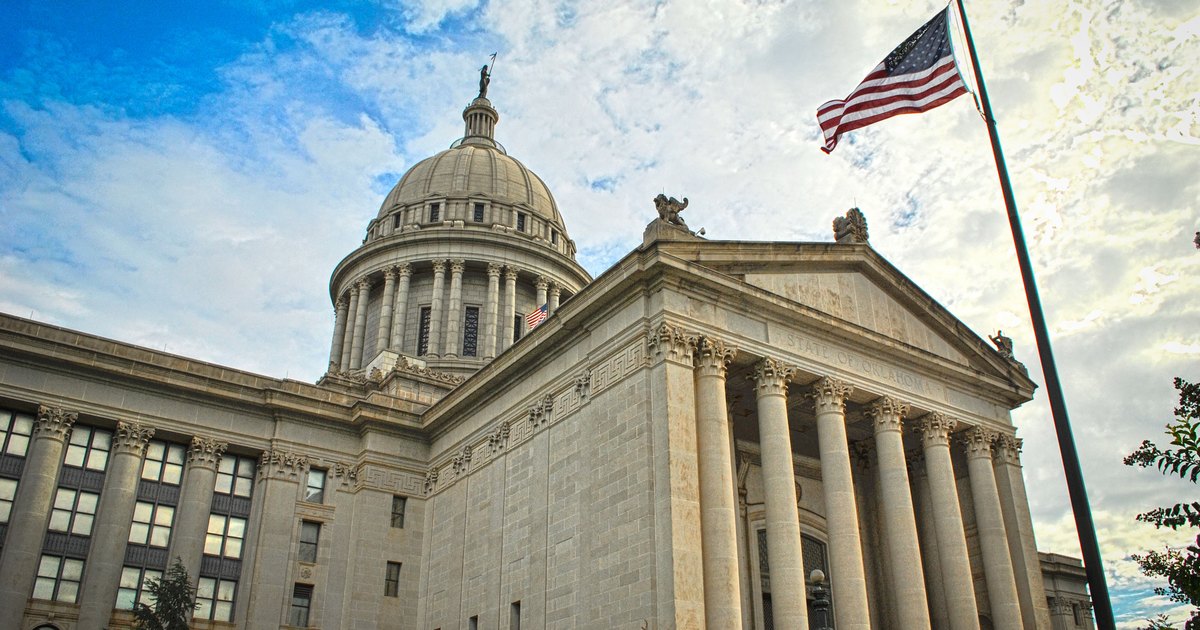
On November 1, 2026, enrolled Oklahoma Senate Bill 1589 took effect. The enrolled act says: “This act shall become effective November 1, 2026.” The bill is Oklahoma criminal law. It is not a NexGen policy change, a license, or a statement that NexGen serves Oklahoma. Distributors, sub-distributors, agents, store operators, and other B2B suppliers — including those based outside the United States who may touch Oklahoma traffic — should read the enrolled text and get qualified local counsel. This article is not legal advice.
What the enrolled act is
The official bill information page lists versions. The latest listed text is Enrolled Senate Bill No. 1589 (PDF). That enrolled PDF is the source for the wording below.
The act amends 21 O.S. 2021, Section 941 (as previously amended in 2025). The subject line on the enrolled cover is “Gambling.” Authors on the enrolled cover are Senator Gollihare and Representatives Hilbert and Fetgatter. The enrolled PDF records that the Senate passed the measure on March 2, 2026, and the House on May 4, 2026.
The legislature’s history table records that the measure was vetoed on 05/07/2026, then that the veto was overridden in the Senate 34–10 and in the House 68–19. Those vote counts are from the official history, not from the enrolled PDF’s signature block.
Who the amended statute names
Section 941, as enrolled, still covers a person who “opens, or causes to be opened,” “conducts,” or “carries on” listed gambling games, including “online casino games,” “for money, checks, credits, or any representatives of value.”
It also reaches a person who, “either as owner or employee, geolocation provider, gaming supplier, platform provider, promoter, or media affiliate, whether for hire or not, deals or provides support for those engaged in any such game.”
That list is in the enrolled statute. It is wider than “owner or employee” alone. How a court would apply “platform provider,” “gaming supplier,” or “provides support” to any given B2B role is a legal question. NexGen does not answer it here.
Dual-currency language
The enrolled act defines “online casino games” as a gambling game accessed over the internet or similar devices that, “upon risking any representative of value, simulates any gambling game described in this section or any other form of gambling,” with examples that include a slot machine, a lottery, bingo, and other referenced games.
It defines “representative of value” to include “any and all currency used as part of a dual-currency system of payment that allows a person to exchange such currency for any prize, award, cash, or cash equivalent, or any chance to win any prize, award, cash, or cash equivalent.”
The enrolled text does not use the word “sweepstakes.” The dual-currency definition is what the statute adds. Trade coverage after the effective date — including 15M on November 4, 2026 and AmeriSpin (updated November 2, 2026) — discussed the November 1 start date. This article does not adopt their penalty-length or operator-exit lists; those are not in the enrolled PDF we opened.
Penalty wording in the enrolled act
A person who violates the amended section “shall be guilty of a Class C2 felony offense, and upon conviction thereof, shall be punished by a fine of not less than Five Hundred Dollars ($500.00), nor more than Two Thousand Dollars ($2,000.00), and by imprisonment as provided for in subsections B through E of Section 20M of this title.”
The imprisonment term is whatever Section 20M provides. This article does not restate Section 20M, which is a different statute.
Exceptions written into the section
The same paragraph begins: “Except as provided in the Oklahoma Charity Games Act or as otherwise authorized to be conducted on Indian lands in compliance with the Indian Gaming Regulatory Act, 25 U.S.C., Section 2701 et seq.” Those are the exceptions in the enrolled text. This article does not expand them.
Other states, same week
Oklahoma used a statute rewrite with an effective date. That is a different tool from the Arkansas Attorney General’s November 4, 2026 news release about a lawsuit against VGW under the Arkansas Deceptive Trade Practices Act. We summarized that release, and Maryland’s November 2 SpeedSweeps notice, in our earlier November 8 industry update. None of those documents is a NexGen legal opinion, and none of them authorizes NexGen to operate in those states.
What this does not change about NexGen
NexGen creates and supplies its own B2B backend accounts. Further credits are only for accounts NexGen supplied. Service is prepaid, with no credit, a minimum of 500 points, and 24/7 chat. Rates are confirmed in chat. Those site terms are unchanged by this article. They are not a claim that NexGen is licensed in Oklahoma or that Oklahoma customers are accepted.
Operators should confirm operating country or state in chat, follow the platforms’ own terms, and take legal advice where they do business — including jurisdictions other than Oklahoma.
This article is for general information only and is not legal advice. Quoting a public statute is not a conclusion about any company, including NexGen. Industry coverage does not imply endorsement or that NexGen offers service in Oklahoma.
Sources
- Oklahoma Legislature, Bill Information for SB 1589 (session 2600): history, versions, veto and override votes
- Oklahoma Legislature, Enrolled Senate Bill No. 1589 (PDF): enrolled text, including November 1, 2026 effective date
- 15M, November 4, 2026: Oklahoma Sweepstakes Felony Law Takes Effect, Naming Affiliates in Statute (secondary)
- AmeriSpin, updated November 2, 2026: Sweepstakes casinos in November 2026 (secondary)
- Arkansas Attorney General, November 4, 2026 news release: lawsuit against VGW
See also: how NexGen prepaid backend accounts work and the current platforms NexGen lists.